
-
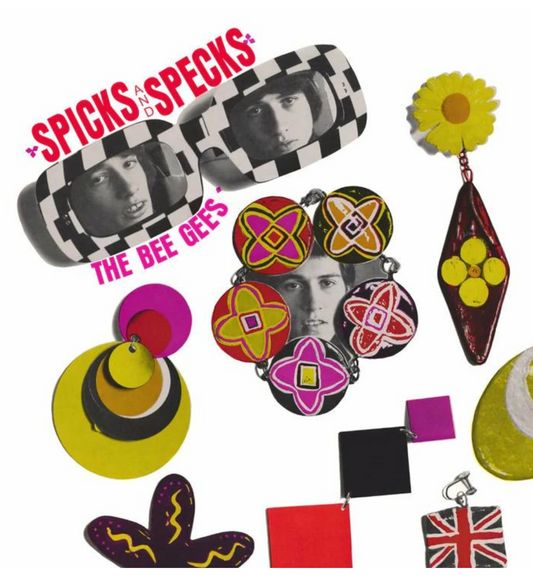
Bee Gees - Spicks and Specks (180g White Vinyl)
Regular price £26.99 GBPRegular priceUnit price per

BEE GEES History

Brothers Barry, Robin and Maurice Gibb formed the Bee Gees, developing a sound built around their vocal harmonies and songwriting. Their records moved from 1960s pop and ballads into rhythm and blues and disco during the 1970s.
Although the brothers were born on the Isle of Man, they spent much of their childhood in Manchester before emigrating with their family to Brisbane, Australia, in 1958. It was there that they began performing together professionally, developing the remarkable vocal harmonies that would later become their trademark.
The Bee Gees achieved international success during the 1960s with songs including New York Mining Disaster 1941, Massachusetts, To Love Somebody, Words and I’ve Gotta Get a Message to You. These recordings established the combination of distinctive lead voices and close harmonies heard throughout their catalogue.
The Gibb brothers wrote their own material and also supplied songs for other performers. Their work beyond the Bee Gees catalogue included recordings by Diana Ross, Barbra Streisand, Kenny Rogers, Dolly Parton and Dionne Warwick.
During the early 1970s, changing musical trends led to a decline in commercial success, prompting the group to reinvent their sound. Working with producer Arif Mardin, the Bee Gees embraced rhythm and blues influences, while Barry Gibb developed the distinctive falsetto vocal style that would become one of the defining sounds of disco music.
The 1977 Saturday Night Fever soundtrack brought the Bee Gees’ Stayin’ Alive, Night Fever, How Deep Is Your Love and More Than a Woman to a film audience. It is a various-artists soundtrack: the version of their song If I Can’t Have You on the album is sung by Yvonne Elliman.
Stayin’ Alive brings together a steady dance rhythm, Barry Gibb’s falsetto and the brothers’ harmonies. It captures the rhythmic direction they had developed on Main Course and Children of the World.
Despite their association with disco, the Bee Gees successfully adapted once again during the 1980s by focusing increasingly on songwriting and production for other artists. Their ability to create memorable melodies ensured they remained commercially successful long after the disco era had ended.
The band’s history has also been marked by personal tragedy. Younger brother Andy Gibb, although not an official Bee Gees member, died in 1988 at the age of just 30 following years of substance abuse and health problems. His death had a profound impact on the family.
Maurice Gibb died in 2003 at the age of 53. His death brought the three-brother recording partnership to an end.
Robin Gibb died in 2012. Barry continued with solo projects and performances drawing on the brothers’ songwriting catalogue.
The Bee Gees were inducted into the Rock and Roll Hall of Fame in 1997, recognising a career that had already crossed pop, soul and dance music.
A Bee Gees vinyl collection can explore the early harmony-led recordings as well as Main Course, Children of the World and Spirits Having Flown. Saturday Night Fever places their songs alongside other performers, so it offers a different experience from a Bee Gees studio album. Track lists are especially useful when comparing compilations with similar titles.
Although the brothers were born on the Isle of Man, they spent much of their childhood in Manchester before emigrating with their family to Brisbane, Australia, in 1958. It was there that they began performing together professionally, developing the remarkable vocal harmonies that would later become their trademark.
The Bee Gees achieved international success during the 1960s with songs including New York Mining Disaster 1941, Massachusetts, To Love Somebody, Words and I’ve Gotta Get a Message to You. These recordings established the combination of distinctive lead voices and close harmonies heard throughout their catalogue.
The Gibb brothers wrote their own material and also supplied songs for other performers. Their work beyond the Bee Gees catalogue included recordings by Diana Ross, Barbra Streisand, Kenny Rogers, Dolly Parton and Dionne Warwick.
During the early 1970s, changing musical trends led to a decline in commercial success, prompting the group to reinvent their sound. Working with producer Arif Mardin, the Bee Gees embraced rhythm and blues influences, while Barry Gibb developed the distinctive falsetto vocal style that would become one of the defining sounds of disco music.
The 1977 Saturday Night Fever soundtrack brought the Bee Gees’ Stayin’ Alive, Night Fever, How Deep Is Your Love and More Than a Woman to a film audience. It is a various-artists soundtrack: the version of their song If I Can’t Have You on the album is sung by Yvonne Elliman.
Stayin’ Alive brings together a steady dance rhythm, Barry Gibb’s falsetto and the brothers’ harmonies. It captures the rhythmic direction they had developed on Main Course and Children of the World.
Despite their association with disco, the Bee Gees successfully adapted once again during the 1980s by focusing increasingly on songwriting and production for other artists. Their ability to create memorable melodies ensured they remained commercially successful long after the disco era had ended.
The band’s history has also been marked by personal tragedy. Younger brother Andy Gibb, although not an official Bee Gees member, died in 1988 at the age of just 30 following years of substance abuse and health problems. His death had a profound impact on the family.
Maurice Gibb died in 2003 at the age of 53. His death brought the three-brother recording partnership to an end.
Robin Gibb died in 2012. Barry continued with solo projects and performances drawing on the brothers’ songwriting catalogue.
The Bee Gees were inducted into the Rock and Roll Hall of Fame in 1997, recognising a career that had already crossed pop, soul and dance music.
A Bee Gees vinyl collection can explore the early harmony-led recordings as well as Main Course, Children of the World and Spirits Having Flown. Saturday Night Fever places their songs alongside other performers, so it offers a different experience from a Bee Gees studio album. Track lists are especially useful when comparing compilations with similar titles.


