
-
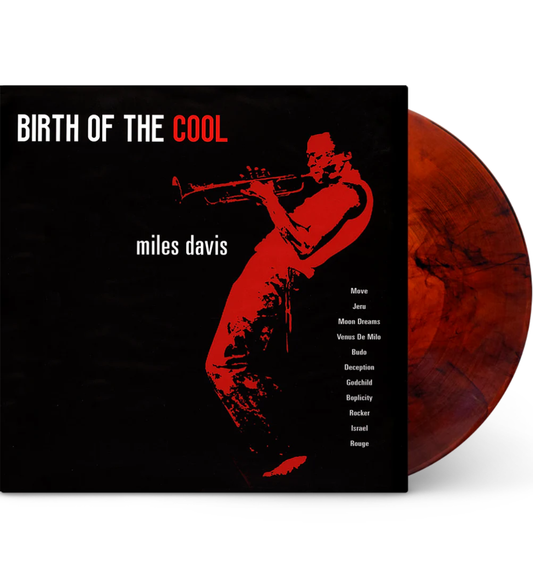
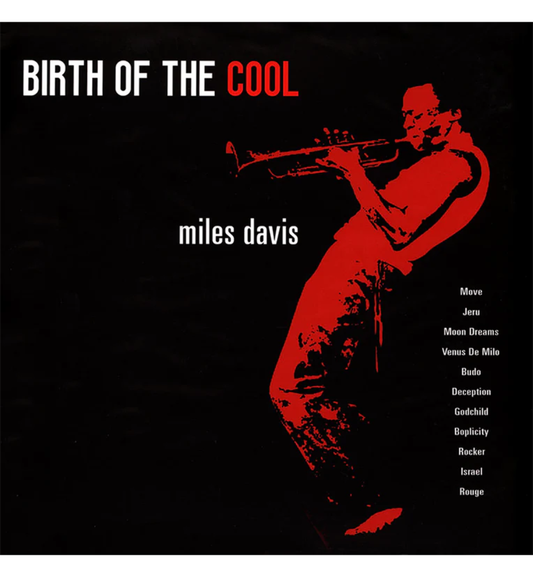
Miles Davis - Birth of the Cool (Limited Edition Hand Numbered on 180g Red Marble Vinyl)
Regular price £29.99 GBPRegular priceUnit price per -
Miles Davis – Sketches of Spain (Limited Edition on 180g Red Cloudy Vinyl)
Regular price £29.99 GBPRegular priceUnit price per


MILES DAVIS History

Miles Dewey Davis III was born on 26 May 1926 in Alton, Illinois. Across a career spanning five decades, Davis continually reinvented both himself and the genre, helping shape bebop, cool jazz, hard bop, modal jazz, jazz fusion and jazz-rock. Few artists have had such a profound impact on modern music.
After moving to New York in 1944 to study at the Juilliard School, Davis quickly became immersed in the city’s thriving jazz scene. Before long, he was performing alongside saxophone legend Charlie Parker, one of the founders of bebop. Although Parker’s fast, virtuosic style dominated jazz at the time, Davis soon began developing a more restrained, melodic approach that would define his own sound.
Kind of Blue, released in 1959, features Davis with John Coltrane, Cannonball Adderley, Paul Chambers and Jimmy Cobb, with Bill Evans and Wynton Kelly appearing on piano. So What, Freddie Freeloader, Blue in Green, All Blues and Flamenco Sketches make up its five-track programme.
Much of Kind of Blue centres on modal approaches: musicians develop ideas around scales and sustained harmonic areas rather than navigating a rapid sequence of chord changes. The resulting space gives the soloists room to shape their phrases in different ways.
Throughout the 1950s and 1960s, Davis released a remarkable series of landmark albums including Birth of the Cool, Round About Midnight, Milestones, Sketches of Spain, Someday My Prince Will Come, E.S.P., Nefertiti and In a Silent Way. Each represented another step in his constant musical evolution.
Bitches Brew, released in 1970, extended Davis’s use of electric instruments, layered rhythms and studio editing. Together with In a Silent Way, it forms a key part of his move towards music that connected jazz improvisation with rock and funk.
Throughout his career, Davis was renowned for discovering and mentoring exceptional young talent. Artists including John Coltrane, Herbie Hancock, Wayne Shorter, Chick Corea, Keith Jarrett, Ron Carter and Tony Williams all passed through his bands before becoming legends in their own right.
Davis stepped away from performing and recording during the second half of the 1970s amid health difficulties. His return in the early 1980s led to another phase of work with contemporary rhythms and production.
Miles Davis was known for his uncompromising personality and relentless pursuit of innovation. Rather than repeating past successes, he continually changed direction, often frustrating critics before ultimately reshaping the future of jazz once again. The contrasts between his acoustic and electric periods are central to exploring his catalogue.
Miles Davis died on 28 September 1991 at the age of 65 following complications from pneumonia, respiratory failure and a stroke. His death marked the end of one of the most remarkable careers in music history, but his influence continues to shape musicians across every genre.
Davis’s vinyl catalogue spans several labels and line-ups. Kind of Blue offers an acoustic small-group setting; Sketches of Spain features orchestral collaboration; In a Silent Way and Bitches Brew explore electric textures. Birth of the Cool belongs to his Capitol recordings, rather than the Columbia catalogue. Session dates and musician credits help distinguish these periods when browsing compilations or live albums.
After moving to New York in 1944 to study at the Juilliard School, Davis quickly became immersed in the city’s thriving jazz scene. Before long, he was performing alongside saxophone legend Charlie Parker, one of the founders of bebop. Although Parker’s fast, virtuosic style dominated jazz at the time, Davis soon began developing a more restrained, melodic approach that would define his own sound.
Kind of Blue, released in 1959, features Davis with John Coltrane, Cannonball Adderley, Paul Chambers and Jimmy Cobb, with Bill Evans and Wynton Kelly appearing on piano. So What, Freddie Freeloader, Blue in Green, All Blues and Flamenco Sketches make up its five-track programme.
Much of Kind of Blue centres on modal approaches: musicians develop ideas around scales and sustained harmonic areas rather than navigating a rapid sequence of chord changes. The resulting space gives the soloists room to shape their phrases in different ways.
Throughout the 1950s and 1960s, Davis released a remarkable series of landmark albums including Birth of the Cool, Round About Midnight, Milestones, Sketches of Spain, Someday My Prince Will Come, E.S.P., Nefertiti and In a Silent Way. Each represented another step in his constant musical evolution.
Bitches Brew, released in 1970, extended Davis’s use of electric instruments, layered rhythms and studio editing. Together with In a Silent Way, it forms a key part of his move towards music that connected jazz improvisation with rock and funk.
Throughout his career, Davis was renowned for discovering and mentoring exceptional young talent. Artists including John Coltrane, Herbie Hancock, Wayne Shorter, Chick Corea, Keith Jarrett, Ron Carter and Tony Williams all passed through his bands before becoming legends in their own right.
Davis stepped away from performing and recording during the second half of the 1970s amid health difficulties. His return in the early 1980s led to another phase of work with contemporary rhythms and production.
Miles Davis was known for his uncompromising personality and relentless pursuit of innovation. Rather than repeating past successes, he continually changed direction, often frustrating critics before ultimately reshaping the future of jazz once again. The contrasts between his acoustic and electric periods are central to exploring his catalogue.
Miles Davis died on 28 September 1991 at the age of 65 following complications from pneumonia, respiratory failure and a stroke. His death marked the end of one of the most remarkable careers in music history, but his influence continues to shape musicians across every genre.
Davis’s vinyl catalogue spans several labels and line-ups. Kind of Blue offers an acoustic small-group setting; Sketches of Spain features orchestral collaboration; In a Silent Way and Bitches Brew explore electric textures. Birth of the Cool belongs to his Capitol recordings, rather than the Columbia catalogue. Session dates and musician credits help distinguish these periods when browsing compilations or live albums.
